
Saltwater vs. Traditional Pools: The Future of Hotel Swimming
From chemical composition to guest experience, we dive deep into the great pool debate and explore where the luxury hotel industry is heading.
Saltwater vs. Traditional Pools: The Future of Hotel Swimming
Walk onto any luxury hotel pool deck today and you might notice something different about the water. It feels softer on your skin. Your eyes don't sting after a long swim. Your hair doesn't turn into straw by day three. Welcome to the saltwater revolution.
But what exactly is the difference between saltwater and traditional chlorine pools, and why are the world's best hotels increasingly making the switch? We dove deep into the science, economics, and guest experience to bring you the definitive guide.
The Chemistry: It's Still About Chlorine
Here's a fact that surprises many swimmers: saltwater pools still use chlorine. The difference is how that chlorine is produced.
Traditional Chlorine Pools
Chlorine is added directly to the water (tablets, liquid, or granules)
Requires frequent manual testing and adjustment
Chlorine levels fluctuate between treatments
That familiar "pool smell" comes from chloramines (chlorine + organic compounds)
Saltwater Pools
Salt (sodium chloride) is added to the water at about 3,000 ppm (ocean water is ~35,000 ppm)
A salt chlorine generator converts salt to chlorine through electrolysis
Chlorine is produced continuously at a consistent, lower level
The process regenerates, creating a self-sustaining cycle
The result? Saltwater pools typically maintain chlorine levels around 1-3 ppm, compared to 3-5 ppm in traditional pools. This lower, steadier concentration makes a noticeable difference in comfort.
The Guest Experience: Why Swimmers Prefer Salt
After surveying hundreds of travelers and reviewing thousands of pool reviews, clear preferences emerge.
What Guests Love About Saltwater
Gentler on skin and eyes: The reduced chlorine concentration means less irritation. Guests with sensitive skin or conditions like eczema often report saltwater pools as significantly more comfortable.
No harsh chemical smell: The chloramine smell that many associate with pools is largely absent. Saltwater pools smell cleaner and more natural.
Softer-feeling water: The salt content creates a subtle buoyancy and silky texture that guests consistently describe as more pleasant.
Hair and swimsuit preservation: Lower chemical exposure means less damage to hair color, fabric elasticity, and swimsuit dyes.
Better for children: Parents appreciate the reduced eye sting and gentler experience for young swimmers.
The Tradeoffs
Slight salinity taste: Some swimmers notice a mild salty taste, though it's far less intense than ocean water.
Temperature sensitivity: Salt chlorine generators work less efficiently in cooler water, which can be a factor for heated pools in colder climates.
The Economics: Why Hotels Are Converting
The shift to saltwater isn't just about guest comfort—the economics increasingly favor the switch.
Initial Investment vs. Long-Term Savings
Upfront costs for saltwater:
Salt chlorine generator: $1,500-$5,000 (residential) to $10,000+ (commercial)
Salt cell replacement every 3-7 years: $500-$2,000
Initial salt purchase
Ongoing savings:
Chemical costs reduced by 50-80%
Less staff time for testing and treatment
Reduced liability from chemical handling
Lower guest complaint rates
A mid-sized resort pool typically recoups the conversion investment within 2-3 years through reduced chemical purchases and labor costs alone.
Maintenance Considerations
Saltwater pools aren't maintenance-free—they just require different maintenance:
Salt cells need periodic cleaning and eventual replacement
pH tends to rise and requires more frequent adjustment
Salt can be corrosive to certain materials (some natural stones, specific metals)
Electronic equipment requires proper installation and grounding
Many hotels report that while the maintenance is different, the overall workload is comparable or reduced.
What the Luxury Market Is Doing
Our research into the world's finest hotel pools reveals clear trends.
Current Adoption Rates
Aman Resorts: Approximately 60% saltwater across portfolio
Four Seasons: Mixed, with new builds trending saltwater
Six Senses: Nearly 90% saltwater, aligned with sustainability focus
One&Only: Majority saltwater in tropical locations
Belmond: Varies by property age and location
New Builds vs. Renovations
For newly constructed luxury properties, saltwater systems have become the default in most markets. We estimate that 70-80% of new five-star resort pools built after 2020 use salt chlorination.
Renovation decisions are more complex, involving factors like:
Existing plumbing and equipment compatibility
Pool surface materials (some finishes react poorly with salt)
Local water chemistry and climate
Guest demographic preferences
Regional Trends: A Global Perspective
The saltwater shift isn't uniform worldwide.
Leading Markets
Australia and New Zealand: Over 80% of new pools are saltwater. The preference is cultural—Australians have embraced salt pools for decades.
Middle East: High adoption in luxury segments, particularly in UAE and Saudi Arabia where the guest experience premium is valued.
Southeast Asia: Strong trend toward saltwater in new builds, supported by year-round warm temperatures ideal for salt systems.
Slower Adopters
Europe: More mixed adoption, with traditional pools still common at historic properties where infrastructure changes are challenging.
Northern climates: Cold-weather destinations show slower adoption due to salt system efficiency concerns and seasonal operation.
The Sustainability Angle
Environmental considerations increasingly influence pool decisions.
Saltwater Advantages
Reduced chemical manufacturing and transportation
Lower risk of chemical spills or improper disposal
Less frequent water replacement needs
No storage of hazardous pool chemicals on-site
Important Caveats
Salt cell production has its own environmental footprint
Backwash water with elevated salt can impact local ecosystems
Energy consumption for electrolysis should be factored in
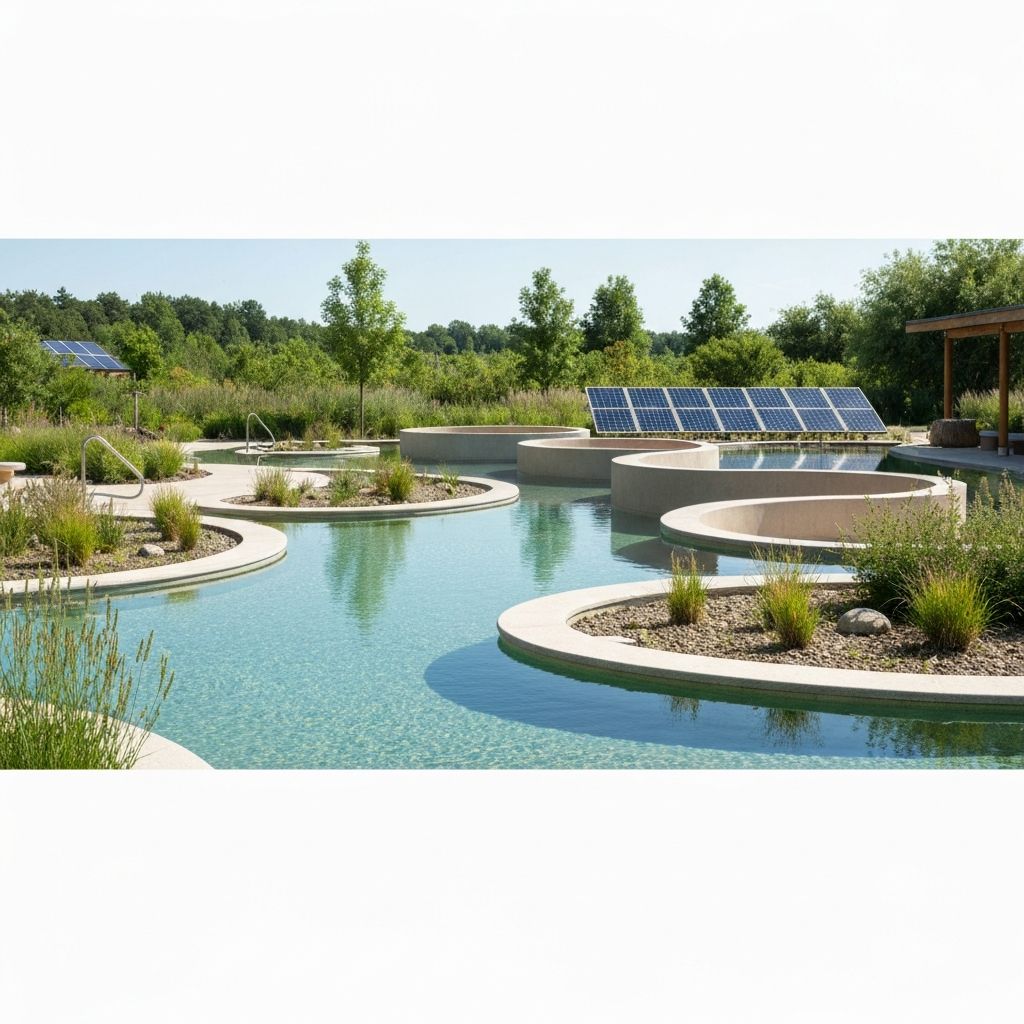
Properties serious about sustainability often pair saltwater systems with solar heating, efficient pumps, and responsible water management.
The Future: Where Is the Industry Heading?
Based on industry conversations and market analysis, here's what we expect:
Short-term (2025-2027)
Continued growth of saltwater adoption in new luxury builds
Major hotel brands establishing saltwater as default specification
Improved salt cell technology extending replacement intervals
More hybrid systems offering flexibility
Medium-term (2027-2030)
Natural pool systems (biofilters, plant-based purification) gaining ground in eco-conscious segments
UV and ozone supplementation becoming standard alongside salt
Smart pool technology automating salt and pH management
Guest expectation shifting to assume saltwater at luxury price points
Long-term Possibilities
Mineral-based systems potentially displacing both salt and traditional chlorine
Closed-loop water systems eliminating discharge concerns
AI-managed water chemistry optimizing guest comfort in real-time
Making Your Choice: A Guest's Guide
When booking your next pool-centric trip, here's how to navigate the options:
Questions to Ask
"Is your pool saltwater or traditional chlorine?"
"What is the typical chlorine level maintained?"
"Do you have any natural or mineral pool options?"
When to Seek Saltwater
Sensitive skin or eyes
Extended pool time planned
Traveling with young children
Concerned about hair/swimsuit damage
Preference for natural-feeling water
When Traditional May Be Fine
Short stays where exposure is limited
Properties with excellent water management (low chloramine levels)
Historic or classic hotels where the traditional approach is part of the character
Our Verdict
The industry trend toward saltwater is well-founded. The guest experience improvements are real and noticeable, the economics increasingly favor the switch, and the environmental profile is generally better.
For travelers who prioritize their pool experience—and you're reading Pool Atlas, so we know you do—seeking out saltwater pools is worth the effort. The difference is subtle but meaningful, especially over a multi-day stay.
That said, a well-maintained traditional pool at an exceptional property still beats a poorly managed saltwater pool anywhere. The skill and attention of the pool management team matters more than the chlorination method.
The future of hotel swimming is almost certainly saltwater, with increasing natural and mineral innovations on the horizon. We're excited to see where the next decade takes us—and we'll be there, taking notes from the pool deck.
Have you noticed the difference between saltwater and traditional pools? We'd love to hear about your experiences. The pool community's collective knowledge helps us all find better swimming experiences.
Get the best pools in your inbox
Monthly discoveries, new rankings, and destination guides — no noise.
Advertisement